


Nordic Microalgae – the next step towards cleaner water and a more sustainable society
2026-03-23
 In his thesis, Ghasem Mohammadkhani investigated whether microalgae that naturally occur in the Nordic region can be used to purify wastewater and capture carbon dioxide – while simultaneously growing and producing valuable biomass.
“Put simply, I’ve spent several years persuading microalgae to eat our waste, clean our water, capture carbon dioxide – and feel good while doing it,” he said.
Four major questions formed the basis of the research:
- How well do the microalgae grow while removing ammonia and volatile fatty acids from different waste streams?
- How high ammonia concentrations can they tolerate when cultivated on digestate from Borås Energi och Miljö?
- How do light and carbon dioxide affect their growth and nutrient uptake?
- How do different carbon dioxide levels and reactor designs influence nutrient uptake and algal growth?
Promising results for both the environment and industry
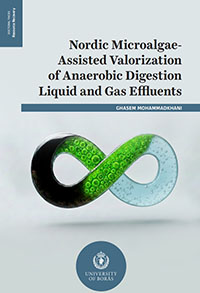 “These tiny microorganisms have proven to be resilient, efficient and useful in several ways at once. My studies show that Nordic microalgae can grow in digestate from anaerobic degradation of various types of waste, take up nitrogen, phosphorus and volatile fatty acids, tolerate high levels of ammonium nitrogen, and produce more fatty acids when additional carbon dioxide is supplied. They produce more protein when no extra carbon dioxide is added and thrive best with a light/dark cycle, which leads to higher cell densities,” said Ghasem Mohammadkhani.
Why is this important research?
“Traditional wastewater treatment requires large amounts of energy and chemicals. Microalgae offer a biological alternative that reduces emissions to nature and can capture carbon dioxide. They enable the recovery of nutrients instead of releasing them and can produce biomass that can then be used for biofuels, bioplastics or other products.”
This means that wastewater treatment plants and biogas producers may in the future be able to reduce their costs, increase their sustainability and recover valuable substances such as ammonium, phosphorus.
Significance for the research field
The thesis contributes important knowledge about how microalgae function in real, complex wastewater – not only in idealised laboratory environments. It shows the thresholds for how much ammonium they can tolerate, how different nutrients are taken up, the roles of light and carbon dioxide, and how reactor design affects the outcome.
Connection to the UN Sustainable Development Goals
The research directly contributes to several of the UN’s 17 Sustainable Development Goals:
Goal 6 – Clean Water and Sanitation
Goal 11 – Sustainable Cities and Communities
Goal 13 – Climate Action
Goal 14 – Life Below Water
Goal 15 – Life on Land
After his public defence, Ghasem plans to continue his career in industry or academia.
“My time as a doctoral student has been very positive, with supportive supervisors, good resources and a creative research environment. I have grown both as a researcher and as a person. It has been a fantastic journey. I’m confident that I will find a role that suits my expertise,” he said.
Read more
Ghasem Mohammadkhani defended his doctoral thesis on 20 March at the Swedish Centre for Resource Recovery at the University of Borås.
Faculty Opponent: Professor Maria Barbosa Wageningen University, The Netherlands
Principal Supervisor: Päivi Ylitervo, Associate Professor, University of Borås
Assistant Supervisor: Amir Mahboubi Soufiani, Associate Professor, University of Borås
Solveig Klug
Ida Danell