


Keynote Speakers
Anne Parpan-Blaser

Social innovations in the context of crises: readiness, co-creation and sustainability
Given its close links to social realities and changes, social work has always been faced with the need to evolve and innovate as a discipline and a professional field. As well as new findings from research, it is often crises that lead to innovation in social work. This contribution clarifies and discusses the concept of (social) innovation in the context of crises and examines how co-creative development can succeed under challenging conditions. After all, the aim is for developments shaped by crises to stand the test of time and for the lessons learnt to be embedded.
Dr. Anne Parpan-Blaser is a trained social worker and professor at the University of Applied Sciences and Arts Northwestern Switzerland (School for Social Work, Institute for Integration and Participation). Over the last 15 years, she has been intensively involved in research, development and teaching in the field of social innovation. Most recently, she published “Social Work and Social Innovation” together with Jean Pierre Wilken and others at Policy Press.
Christine Robinson
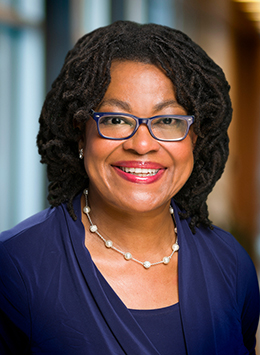
Care as the Bedrock of Collective Capacity: Participation, Co-Creation, and Leadership in Times of Crisis
How do we chart a path forward together in a world shaped by volatility, uncertainty, complexity, and ambiguity (VUCA)? Crises and disasters encounter communities and institutions as they are, revealing and challenging the relationships, structures, resources, cultures, and capacities already present.
Drawing on four decades of experience across public health, disability justice, philanthropy, government, community development, organizational leadership, and systems change, Christine Robinson illuminates care as the essential foundation for full and authentic participation in democratic societies. Her keynote examines how circumstances before, during, and after crisis shape who is recognized, whose knowledge is valued, who participates, and how people and institutions act in concert.
Through the dimensions of care, participation, co-creation, and leadership, Robinson invites us to consider how we build collective capacity through our daily lives; strengthening the collective fabric, preparing us for disruption, grounding our response, and fostering growth through times of profound change.
Christine Robinson is an interdisciplinary systems strategist, facilitator, and public intellectual whose work explores the conditions that shape human participation, institutional trust, and collective life within democratic societies.
Regardt "Reggie" Ferreira
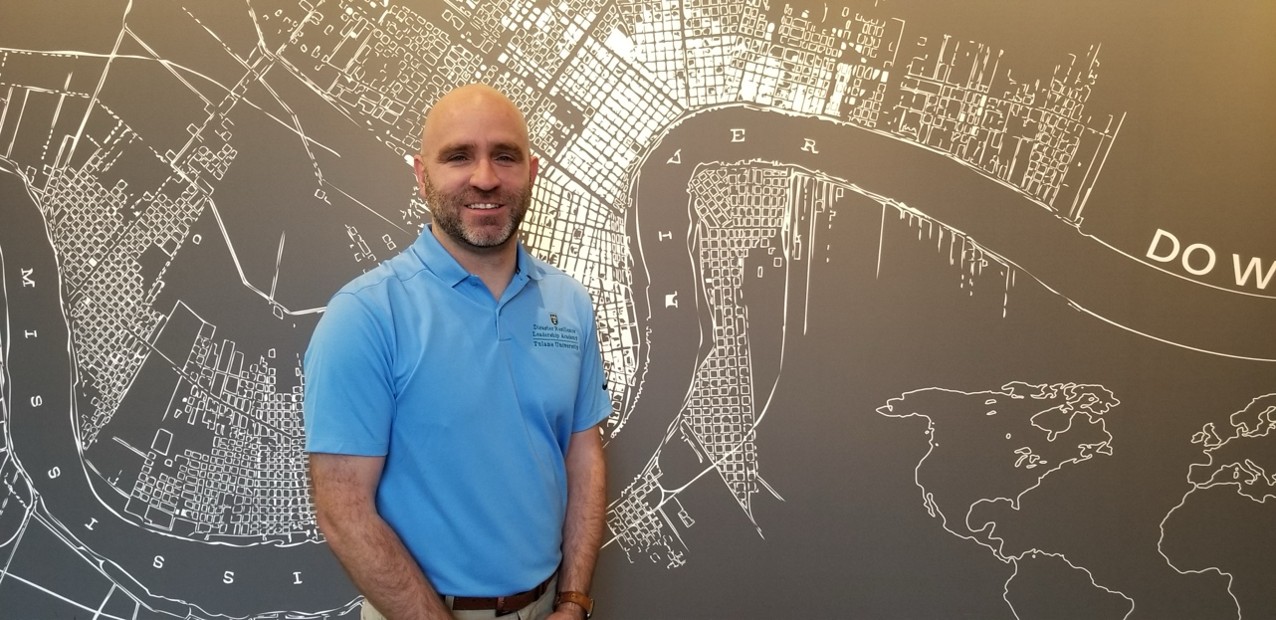
From Resilience to Action: Building Equitable Solutions in an Age of Disasters
Regardt "Reggie" Ferreira, Ph.D., is a tenured Full Professor and Director of the Disaster Resilience Leadership Academy at Tulane University School of Social Work, New Orleans, USA and Founder and Executive Director of the Consortium for Emergent Disaster Resilience. He is also a Research Fellow at Stellenbosch University and the Sasakawa Peace Foundation USA.
His work sits at the intersection of disaster resilience, social work, climate adaptation, mental health, and social vulnerability, with a particular emphasis on translating research into practical and equitable solutions for communities affected by disasters.
Over more than two decades, Dr. Ferreira has worked across the United States and internationally to advance community resilience through research, education, policy, and practice. His work has increasingly focused on disaster resilience – examining why disaster systems produce unequal outcomes and how communities, researchers, practitioners, governments, and funders can co-create more effective solutions. Through CEDR, his current work includes disaster assistance reform in the United States and community-driven resilience initiatives across Southern Africa. His research spans disaster preparedness and recovery, social vulnerability, climate change, trauma and mental health, and resilience.
Dr. Ferreira has contributed to more than 45 million dollars in funded research and initiatives and has authored more than 100 peer-reviewed publications and abstracts, along with numerous reports and book chapters. His expertise is frequently sought by prominent media outlets, including CNN, Rolling Stone, Voice of America, TIME, HBO/VICE, The Atlantic, Fox, Fox News, NBC, NBC News, CBS, ABC, Daily Mail, Reuters, Medscape, NPR, Futurity, ScienceDaily, USA Today, Inside Climate News, and Globo. His recent scholarship includes work on barriers to equitable disaster recovery, climate and health equity, social vulnerability and preparedness, and mental health and psychosocial well-being in the context of climate change. He served as Editor-in-Chief of the American Psychological Association Journal Traumatology from 2017–2025 and serves on the Board of Directors of the Global Resilience Partnership.