


How a new research field is being formed – a study on the structures of sustainability science
2026-06-09

The doctoral thesis examines how sustainability science, a research area at the intersection of climate, environment and societal transition, has been established and gained legitimacy over time. The focus is on how scientific structures affect which perspectives have an impact and which voices are given space.
In contrast to previous studies that mainly analysed publications and citations, this also focuses on how power and influence are organised in science. Central empirical material is editorials in scientific journals and the composition of editorial boards.
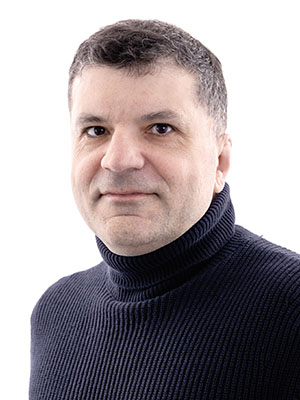 “It is in these contexts that a research field is defined in practice: which issues are considered important, which perspectives are highlighted, and which researchers are given visibility,” said Marco Schirone, who recently defended his thesis in Library and Information Science.
Editorial processes shape the research field
The dissertation is based on a combination of sociological theory and quantitative analyses. Based on Pierre Bourdieu's sociological framework, it analyses how recognition and status are created in scientific fields. By studying editorials in scientific journals over three decades, it becomes possible to follow how sustainability science has defined itself over time.
In parallel, publications, citation patterns and research collaborations have been analysed, as well as editorial boards through network analyses.
"All in all, not only what is published is made visible, but also which actors set the framework for what can be published and thus what counts as legitimate knowledge," explained Marco Schirone.
A transformation paradox
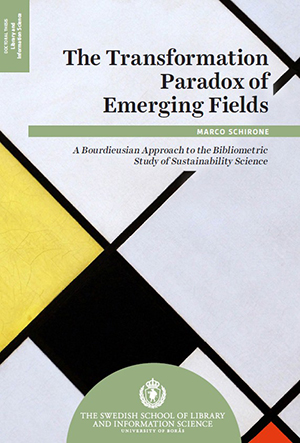 A central result is what is described in the thesis as a transformation paradox. Sustainability science has the stated goal of contributing to societal change but is at the same time dependent on established academic systems for recognition and legitimacy. These systems are based on competition, visibility and status, which tends to benefit already established players and networks.
The study shows that editorials function as an arena where influential researchers formulate what the field is and should be, while editorial boards act as gatekeepers for which ideas and researchers reach out. Influence is concentrated in certain journals and networks, which helps to recreate hierarchies – even in a research field that has the ambition to be inclusive.
Contributes to deeper understanding
By making visible how academic hierarchies arise and are maintained, the thesis contributes to a deeper understanding of how knowledge is produced and disseminated. This has an impact on the perspectives that reach decision-makers and the general public, not least in research aimed at supporting sustainable development.
The results also show that new and interdisciplinary research fields can quickly develop their own power structures. Editorial processes and publishing systems thus play a crucial role in how research is valued and delimited – an insight that is relevant to the work of creating more open and equal research environments.
Read more
Marco Schirone defended his doctoral thesis in Library and Information Science on 5 June at the University of Borås.
Principal supervisor: Professor Björn Hammarfelt
Assistant supervisor: Gustaf Nelhans, Associate Professor
External examiner: Alesia Zuccala, Associate Professor, University of Copenhagen
Solveig Klug
Suss Wilén and Ida Danell (portrait photo)