


Circularity is online, but is it in store?
2026-11-26
I visited their stores, talked with staff and compared what I saw with how each brand presents circularity on its website. The results show a clear gap: circular initiatives are well developed and visible online, but they are hard to find in the stores. Repair services exist at all three retailers but are not communicated in store, so customers need to know about them in advance. The project also compares Zara, which runs its Pre-Owned service internally, with H&M and Weekday, which outsource second-hand sales to Sellpy.
Abstract
The fashion industry is under growing pressure to become more circular, and many retailers now offer second-hand and repair services. However, it is still unclear whether these initiatives represent real changes to the business model or are mainly a communication strategy. This study asks how fashion retailers integrate second-hand and repaired products across physical stores and digital channels. It is a qualitative multiple-case study of Zara, H&M and Weekday, based on in-store observations, semi-structured conversations with staff and systematic observations of each retailer’s website. The findings show that circular services are far more developed online than in physical stores, that repair services are largely invisible to customers, and that outsourcing second-hand to third parties may limit operational depth. The study distinguishes between symbolic circularity, which exists mainly in communication, and operational circularity, which is embedded in the everyday customer experience. None of the three retailers fully reaches the second category. The study suggests that future progress depends less on launching new services and more on making existing ones visible and accessible in store.
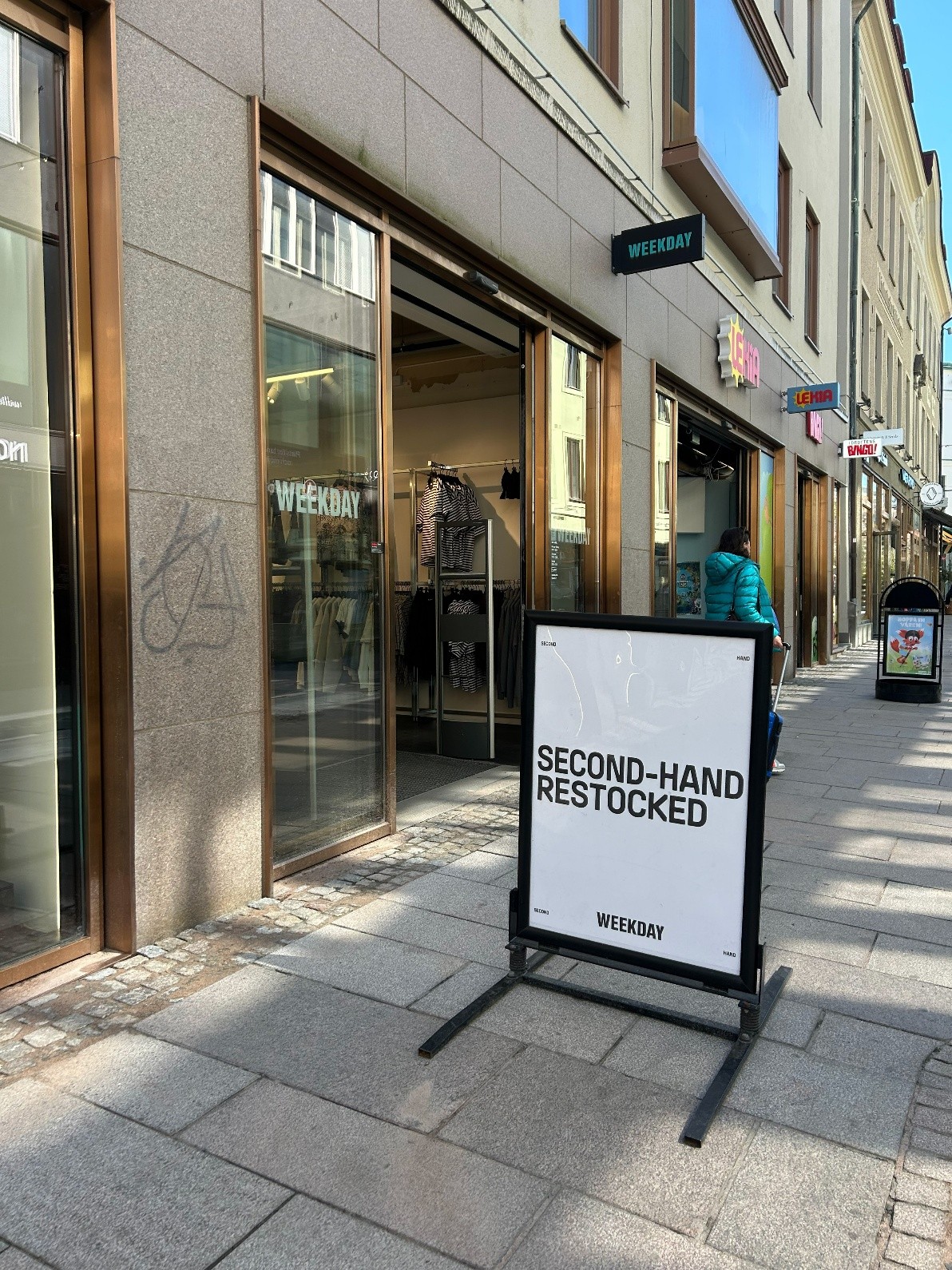
Project details
Title: Circularity in Practice: How Zara, H&M and Weekday Integrate Second-Hand and Repair Across Physical Stores and Digital Channels
Tagline: Circularity is online, but is it in store?
Author: Clara Pujol Rodríguez
Course: Field Study
Program: Masters programme Fashion Marketing and Management
Researcher / Supervisor: Lars Hedegård
Case company: Zara (Inditex), H&M and Weekday (H&M Group)
Technology: In-store observation and systematic online observation of retailer websites
Clara Pujol Rodríguez