


Equipment
Virtual Reality
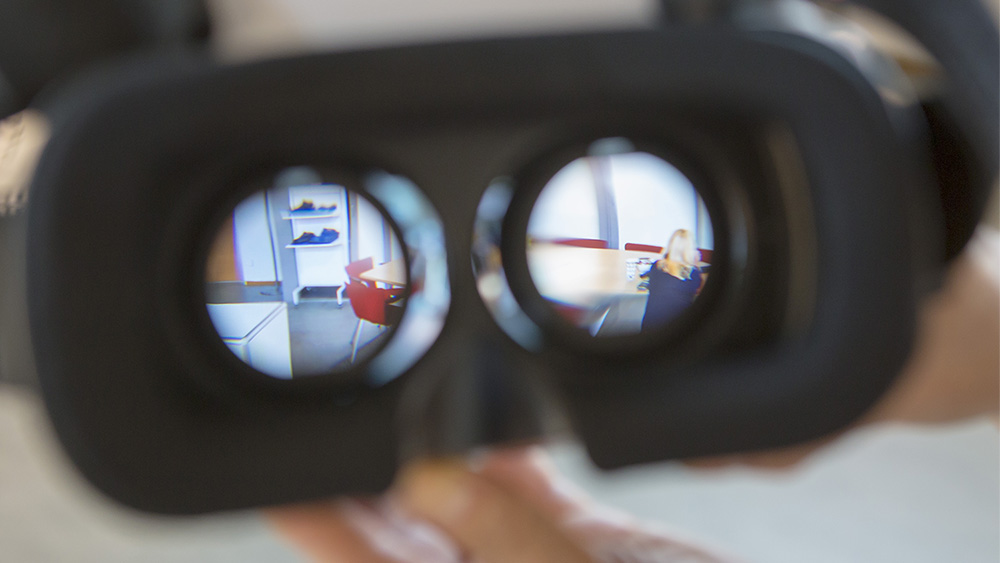
In the lab, we work with Virtual Reality (VR) technology. We use the HTC VIVE and Oculus Quest 2 systems.
For example, Virtual Reality (VR) can be used to add value to consumers by digitising experiences that are otherwise difficult to show and describe. Try VR with us!
The Metaverse is described as the inevitable evolution of the internet. But what is the Metaverse and what does it mean for the future? Come in and talk about this and watch our film Digital Business Lab in The Metaverse.
AI tools
In the Digital Business Lab, we can present examples of how AI tools are used today — from text-to-image technology, where AI generates images from written descriptions to conversational AI such as ChatGPT, which can generate and refine text in a way that closely resembles human writing. These systems have developed rapidly and can now create detailed, realistic responses as well as stylized visuals.
Looking ahead, AI is evolving from separate tools into integrated systems that support decision-making, creativity, and automation across entire workflows. This raises important questions: How will these technologies reshape industries and everyday work? How can we ensure transparency and trust? And how do we manage challenges such as bias, data privacy, and over-reliance on automated systems?
Rather than focusing only on what the tools can do, the key question today is how we choose to use them — responsibly, critically, and creatively.
Eye tracking (screen)
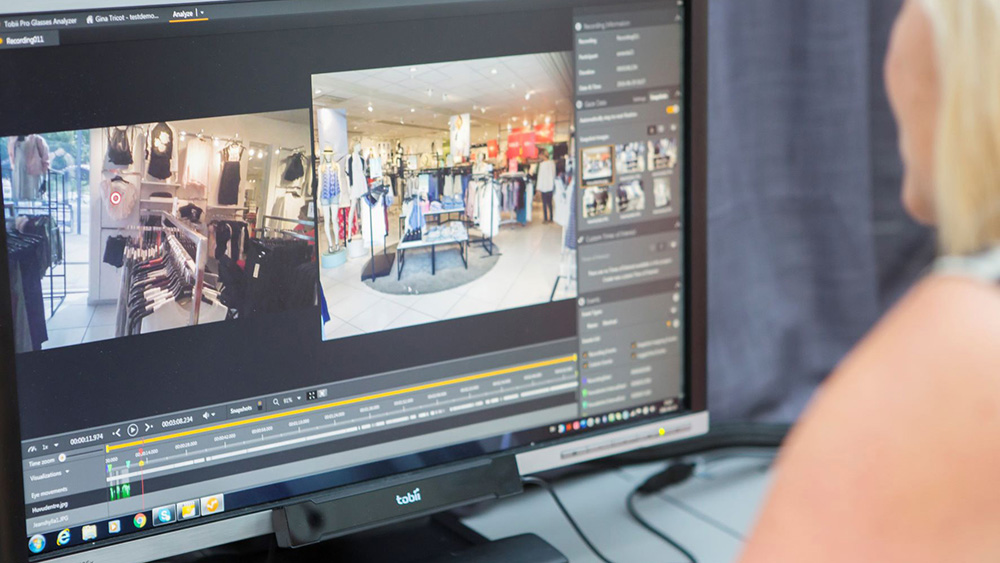
Eye tracking equipment measures eye movements across a computer screen through an advanced camera. The test person is given a task to perform, such as buying a product or viewing a digital advertisement. The eye tracking is followed by an interview. By combining eye tracking and interviews, it is possible to get an overall picture of what is experienced in front of the screen.
Eye tracking (glasses)
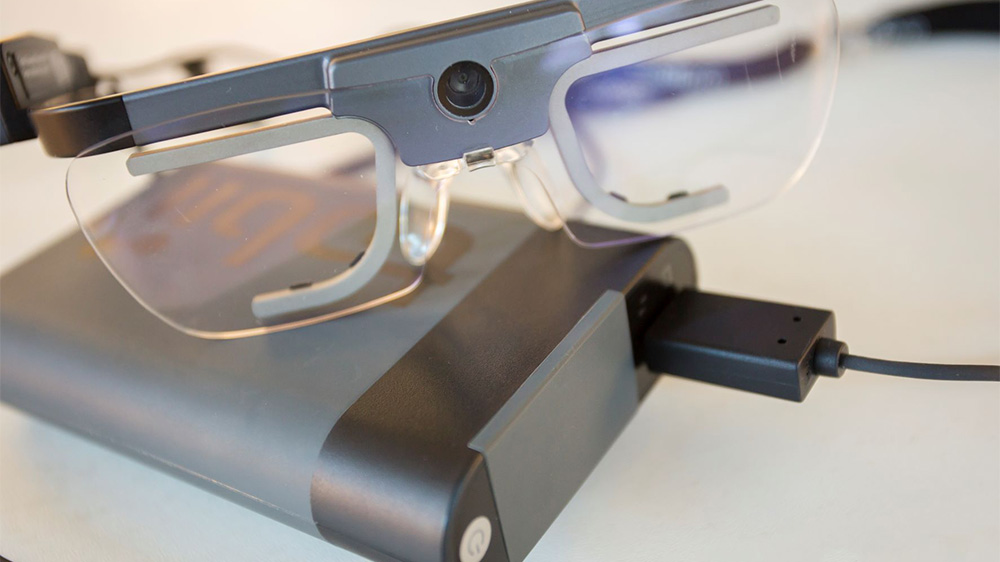
Eye tracking glasses measure the movement of the eyes when the test person is moving in a physical environment or looking at other physical products, such as printed advertisements. With this equipment it is possible, for example, to monitor how a customer moves while they are looking around a store. This can be used to test new store concepts. The possibilities are virtually limitless for eye tracking in real-world environments.
Galvanic Skin Response (GSR)
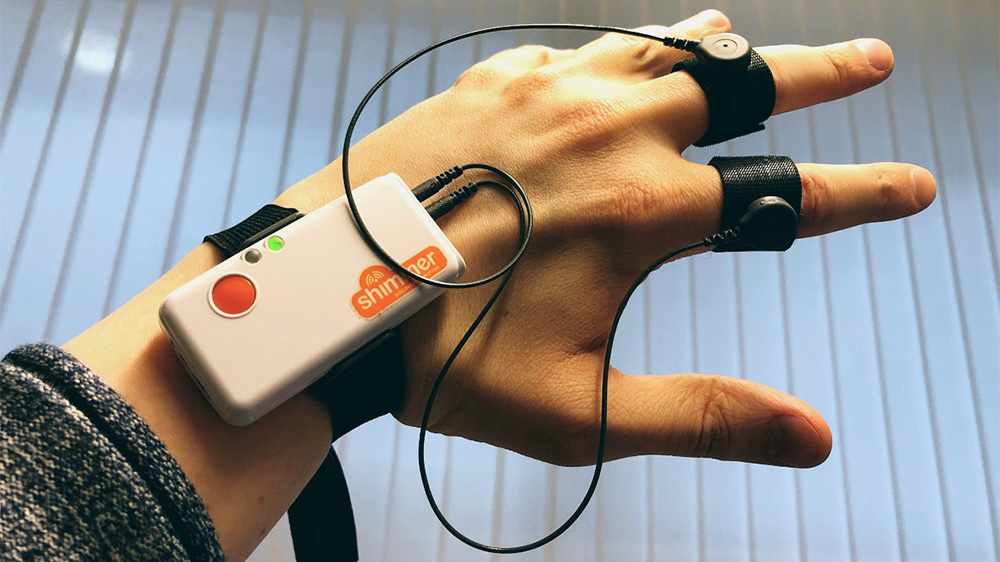
Shimmer GSR (Galvanic Skin Response) is a sensor that measures temperature changes in the skin, such as when you are excited or agitated. The sensor is ideally used together with the screen-based eye tracking equipment available in the Digital Business Lab. In this way, it is possible to measure what happens if different types of stimuli are added during the eye tracking test, such as music, occurrences, etc.
Interactive fitting room
A fitting room can be so much more than a room to try on clothes. The lab's fitting room has a touch screen where you can use various services, such as a button to help you choose a different size, a different delivery method, suggestions for matching garments, etc. The test room uses RFID.
IT support in stores
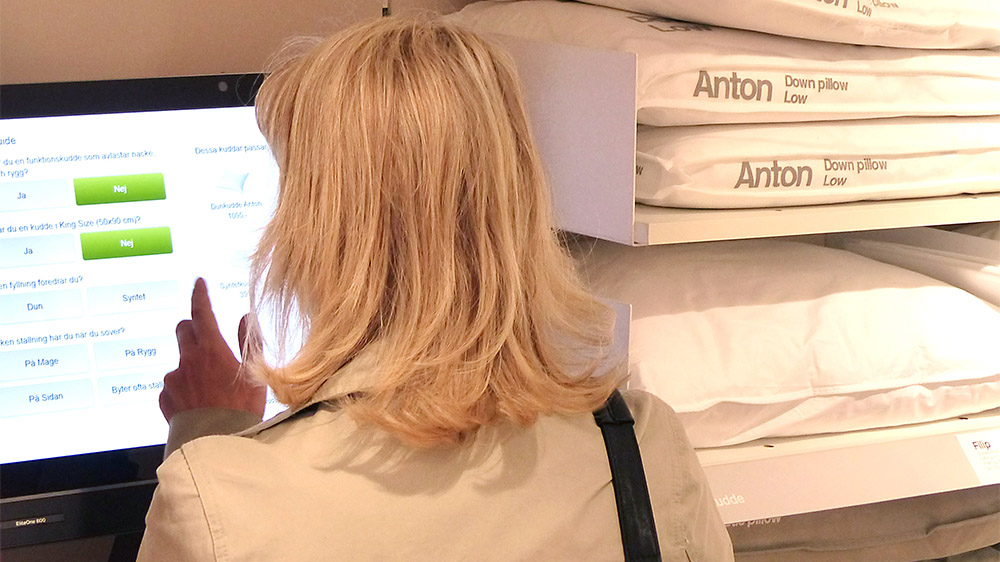
An IT tool has been developed to support the consumer when shopping in stores. For example, the customer can use it to help with the purchase of complex products where more information about the product is needed to decide what is an appropriate purchase.