


Doing a Minor Field Study (MFS) showed Ajmery that she can handle anything
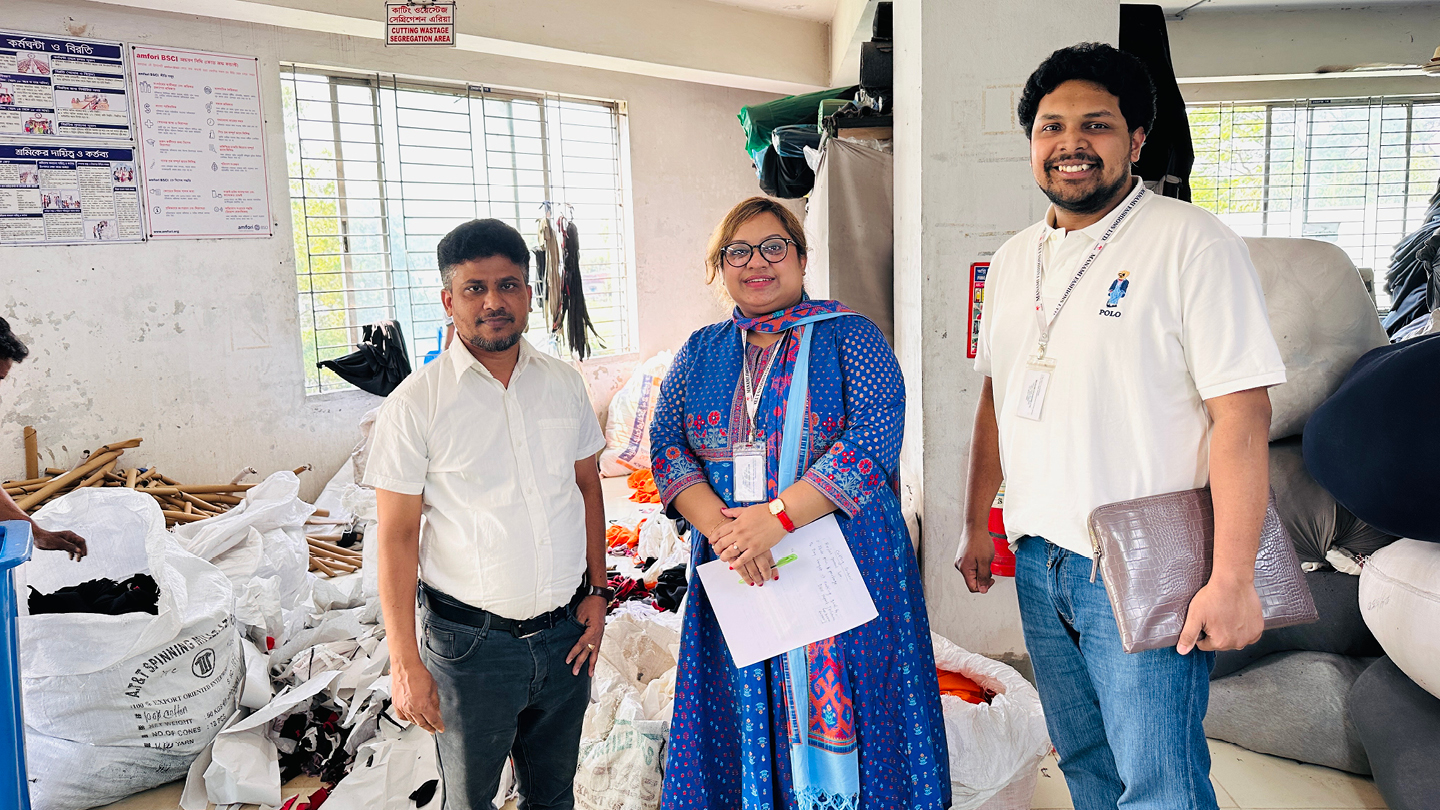
Why did you choose Bangladesh and your research topic?
“I worked with workwear during my first year field study and realized that while the workwear industry is large, recycling within the sector is still very limited. I wanted to understand why.”
When the opportunity to apply for an MFS scholarship appeared, Ajmery began connecting her research interests with countries that have major textile industries.
“I could have chosen countries like India, Pakistan, Vietnam, or Bangladesh, but Bangladesh felt like the most natural choice since I also have a background there.”
Her thesis focused on investigating the value chain of post-industrial workwear waste in Bangladesh and identifying the barriers preventing higher quality and larger-scale recycling outcomes.
Taking the leap into field research
Ajmery first discovered the MFS scholarship while exploring different opportunities connected to her studies.
“My supervisor mentioned another scholarship, and by coincidence I also found MFS. I became really motivated by the idea of doing a research-oriented field study abroad.”
Receiving the scholarship became a memorable moment in itself.
“I still remember the feeling when I got the news that I had received the scholarship.”
Arriving in Bangladesh brought a mix of excitement and anticipation.
“I arrived at nighttime and the city was dark, but I still felt very motivated about starting my research. I had a good feeling from the beginning.”
Learning through challenges
Although the experience was rewarding, fieldwork also came with unexpected obstacles. Ajmery arrived in Bangladesh during a fuel crisis, which made transportation difficult throughout her stay.
“Travelling between different locations became a real challenge, especially when interviews were rescheduled.”
Still, she found ways to adapt. Through one of her professional contacts, she learned about a gas station helping people connected to the garment industry access fuel, which made it possible for her to continue travelling to research sites.
The experience taught her the importance of flexibility and problem solving.
“I had to adapt my methodology once I arrived because it didn’t fully match the reality on site. But once I adjusted it, everything fell into place.”
She also had to adjust parts of her original project plan. While she initially hoped to conduct more interviews and visit a larger number of manufacturing factories, practical limitations affected what was possible within the timeframe.
Despite this, she managed to visit multiple recycling facilities and gather valuable material for her thesis.
Experiencing the textile industry firsthand
One of the strongest impressions from the field study was the difference between reading about working conditions and experiencing them directly.
“I had prepared by reading articles and research about the work environment, but it is completely different when you see it with your own eyes.”
Meeting people and working in another environment also changed her perspective both academically and personally. “In Sweden, everything moves at a slower pace. In Bangladesh, everything is fast and rushed, and people work incredibly hard. It was amazing to see.”
Ajmery describes the entire experience as transformative. “The best part was that it taught me independence. I really felt that I grew from the experience.”
She also highlights how welcomed and respected she felt throughout the project.
“People genuinely wanted to share their perspectives with me and contribute to my research.”
Building professional connections
During her field study, Ajmery collaborated closely with the company Reverse Resources, an Estonian company with operations in Bangladesh that works with textile waste and recycling solutions.
“They helped me a lot throughout the project.”
The collaboration also opened possibilities for future professional cooperation.
“We developed a really good connection, and I can definitely imagine collaborating with them again in the future.”
Growing professionally and personally
For Ajmery, the MFS experience became much more than a thesis project.
“MFS helped me realize that if you can complete a thesis together with doing a field study abroad, then you can handle almost anything.”
The project strengthened both her confidence and independence, especially because the research was conducted in a country she has personal ties to.
“I felt proud that I carried out a research project back home in Bangladesh.”
Looking back, she says the experience left a lasting impression in many ways — from receiving the scholarship to the professional connections and personal growth she gained during the journey.
Advice to future MFS students
Ajmery strongly recommends Minor Field Studies to other students.
“It helps you grow both professionally and personally.”
For students who feel unsure about applying, she encourages early preparation and confidence.
“Start thinking about your thesis early and connect your research topic to real development challenges. Reach out to companies and organisations through LinkedIn or other networks, and learn about the culture of the country beforehand, so that you are prepared.”
And most importantly:
“Be confident”
Text: Natalia Vargas
Photo: Private