

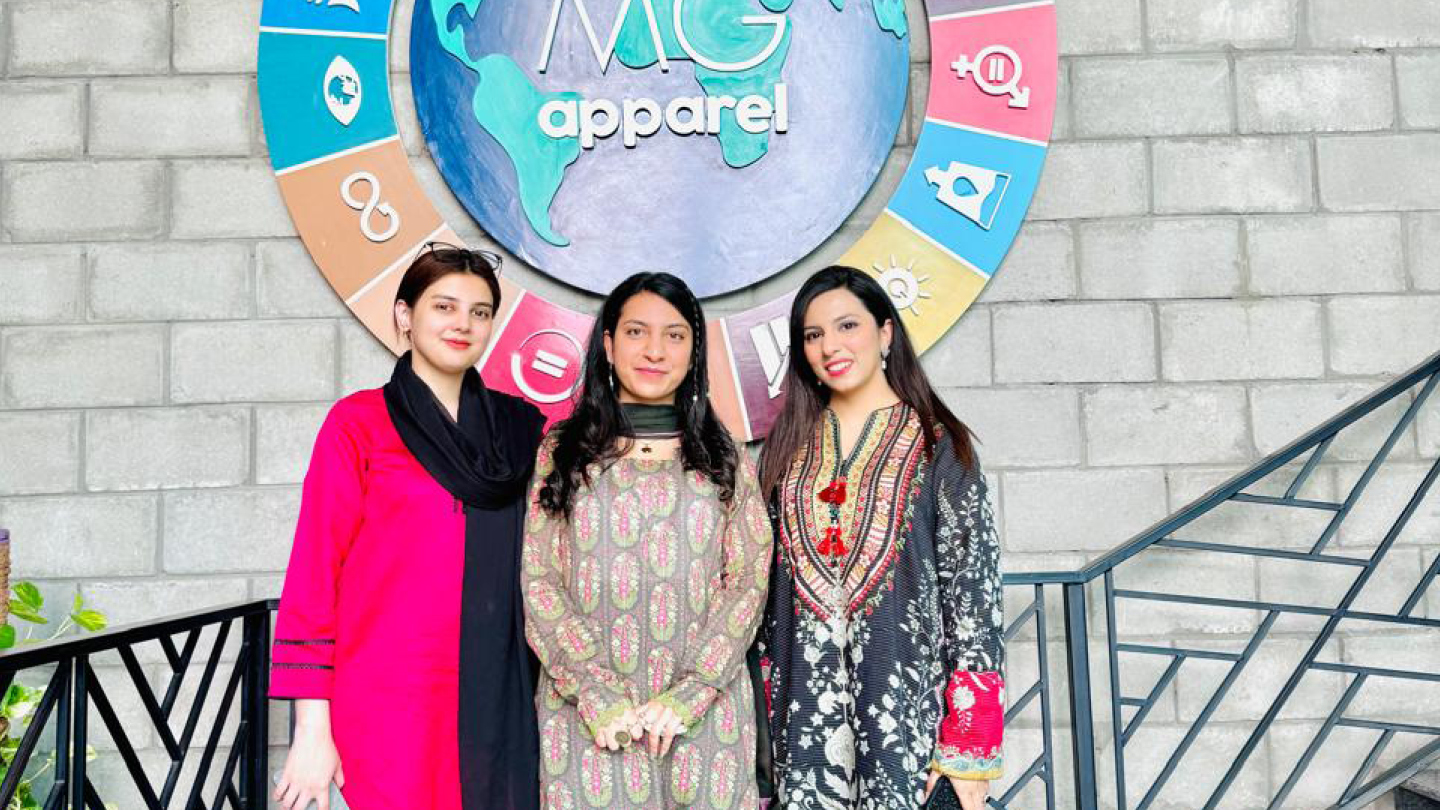
Hamna's Minor Field Study in Pakistan
What did you study during your MFS fieldwork?
“I investigated how skill development, career mobility, and wage growth affect women supervisors and mid-level managers in Pakistan's garment industry. I also looked at how organisational support systems influence women's career progression.”
Why did you choose this topic?
“As a woman who has worked in Pakistan's textile sector, I have seen how challenging it can be for women to advance in their careers. I wanted to better understand these barriers and challenges that women still face and contribute to research on gender equality, which is also a key focus of Sida that emphasize women’s economic empowerment by enabling equal access to resources and opportunities and also the Sustainable Development Goals you needed to meet when applying for the MFS scholarship.”
Why did you choose Pakistan?
“Pakistan has the largest textile and garment industry, making it highly relevant to my studies in Textile Value Chain Management. It also allowed me to explore issues I had personally observed in Pakistan’s textile and garment industry. Around 30 percent labor is women in textile industry so I really wanted to explore women’s situation in Pakistan. Also, Pakistan is an amazing country in terms of textile innovation, adopting new technology, so I learned a lot of things which I couldn’t familiarize with before.”
What was the highlight of your field study?
“Being able to conduct my own research in the field was incredibly rewarding. It was also special to have the opportunity to spend time with family members living in Pakistan when I felt alone and overwhelmed. Their support encouraged me and motivated me to cope with the challenges. And the most rewarding aspect of MFS was having the opportunity to represent the University of Borås and contribute to an international research experience.”
What challenges did you face?
“One of the biggest challenges was translating my interviews conducted in Urdu to English, which took much longer than expected. I also had to learn a new software for data collection and analysis, and adjusting to the hot climate after living in Sweden was not easy.”
What was the most important thing you learned?
“I learned the value of patience and flexibility. Fieldwork rarely goes exactly as planned, and being able to adapt to challenges is an important part of the research process.”
How many people did you interview?
“I conducted 28 interviews with women working as supervisors, mid-level managers, senior managers and HR policy makers in the garment industry.”
Did the experience affect you personally?
“Absolutely. The experience increased my confidence and independence. It showed me that I can overcome challenges and carry out research in an international environment.”
Would you recommend MFS to other students?
“Definitely. MFS gives you the opportunity to step outside your comfort zone, build international networks, gain valuable research experience, and grow both professionally and personally.”
What's next for you?
“My goal is to apply for a PhD in the future. I have also moved to Stockholm to explore new career opportunities, while remaining open to where future work may take me. If it’s in Borås I would be very happy, I love Borås!”
Text: Natalia Vargas
Photo:Private